
The sound that wakes you isn’t thunder. It’s the splintering crack of soaked drywall giving way and the steady rush of water pouring through the ceiling. An upstairs pipe burst during the earthquake, or a wind-torn roof let in a night of relentless rain, and now the downstairs of your Nampa home is turning into a shallow indoor lake. Furniture legs disappear under murky water, boxes you meant to unpack weeks ago are dissolving into pulp, and every second the water sits, it seeps deeper into flooring, walls, and wiring. In the middle of that chaos, the difference between a recoverable home and a total loss often comes down to one thing: how quickly and effectively that water is extracted.
Rapid water extraction after a catastrophe is not just a cleanup task; it is an emergency intervention to stop cascading damage. When a major event hits – a flash flood along the Boise River, a broken main after a winter freeze, or a fire that was extinguished with thousands of gallons of water – structures become saturated in minutes. Without fast removal, water migrates into every crack, fuels mold growth, compromises electrical systems, and even weakens the structural framing. This is why professional restoration teams, like Allay Disaster Cleanup Services in Nampa, ID, move with urgency: their first priority is to get standing water out as fast and as safely as possible, then chase the hidden moisture that you cannot see.
In the aftermath of a catastrophe, homeowners and business owners are often overwhelmed, trying to juggle insurance calls, temporary housing, and personal safety. It’s tempting to treat water extraction as just “mopping up” or running a few fans. But in reality, effective rapid extraction is a coordinated process involving assessment, specialized equipment, structural science, and safety protocols. Understanding what actually happens during those first critical hours can help you make better decisions, protect your property, and know what to expect when a professional team arrives at your door.
Why Speed Matters Most
Water damage is one of the few types of property damage that worsens dramatically with time, even if the original source has been stopped. Within the first hour of a catastrophe, water begins wicking into drywall, insulation, baseboards, and subflooring. Porous materials such as carpet and padding soak up water like a sponge, holding it against wood framing and flooring. If extraction does not begin quickly, what started as a surface problem turns into a deep structural issue that is more expensive and time-consuming to fix.
Within 24 to 48 hours, conditions become ideal for mold and bacteria to flourish. Nampa’s climate can be dry at times, but inside a closed, wet structure the humidity can spike to levels that create a perfect environment for microbial growth. Once mold begins colonizing behind walls or under flooring, remediation becomes more complex, involving containment, air filtration, and sometimes removal of contaminated materials. Rapid water extraction dramatically reduces this risk by removing the bulk of the moisture before it can soak in and stagnate.
Speed also matters for the integrity of the building itself. Prolonged saturation can cause swelling, warping, and delamination of wood products and engineered materials. Subfloors can become spongy, doors and windows may no longer close properly, and in severe cases, structural framing can be compromised. For commercial properties in Nampa, every extra day of downtime due to structural repairs means lost revenue. By rapidly extracting water and stabilizing the environment, restoration professionals can often save materials that would otherwise need to be torn out and replaced.
Finally, rapid extraction has a direct impact on safety. Standing water can conceal hazards such as broken glass, sharp debris, or electrical dangers. It can also mix with sewage, chemicals, or other contaminants after a catastrophe, turning a simple spill into a health risk. The sooner that water is removed, the sooner the property can be safely assessed, cleaned, and restored for occupancy.
First Steps After Water Strikes
When a catastrophe hits, the first instinct is often to start bailing water or moving belongings. While quick action is important, safety and strategy should come first. Before anyone enters a heavily flooded area, electricity should be shut off if it is safe to do so, especially if water levels are near outlets, appliances, or electrical panels. If you cannot reach the main breaker without walking through water, it is safer to wait for professionals or the utility company to assist. Structural instability, falling debris, and contaminated water are also real risks that must be considered before any DIY response.
Once immediate dangers are addressed, contacting a professional water extraction company should be at the top of the list. Teams like Allay Disaster Cleanup Services in Nampa, ID, are equipped to respond 24/7, which is critical because water damage does not wait for business hours. While you wait, you can take small, safe steps such as moving unaffected items to higher ground, placing aluminum foil or wood blocks under furniture legs to reduce staining, and opening interior doors to promote air movement, provided the structure is stable.
Documenting the damage early is also important. Photos and videos of the affected areas, the water line, and damaged belongings will be valuable for insurance claims. However, it is not necessary – or advisable – to fully inventory or clean everything yourself before professionals arrive. Rapid water extraction teams will conduct their own assessment and can help you prioritize what can be salvaged and what must be discarded for health or safety reasons.
During this early phase, communication with your insurance carrier should begin, but you do not need to wait for an adjuster to start emergency mitigation. Most insurance policies expect and encourage policyholders to take reasonable steps to prevent further damage, which includes rapid water extraction and drying. Reputable companies in Nampa will provide detailed documentation and moisture readings that support your claim and show that you acted promptly to protect your property.
How Professionals Extract Water Fast
Professional rapid water extraction goes far beyond shop vacs and household pumps. The process starts with a thorough inspection using moisture meters, thermal imaging cameras, and sometimes borescopes to understand how far the water has traveled. Technicians identify the types of materials affected – concrete, hardwood, drywall, insulation, carpet – and determine the best extraction methods and drying strategies for each. This initial evaluation allows them to set realistic expectations and create a plan tailored to your specific catastrophe.
The first priority is removing standing water. High-capacity, truck-mounted extraction units are commonly used because they can pull large volumes of water quickly and with strong suction. For areas that are harder to reach, such as basements, crawlspaces, or upper floors, portable extraction units and submersible pumps may be deployed. In carpeted areas, weighted extraction tools may be used, where a technician rides or presses down on a specialized device that squeezes water out of carpet and padding more effectively than standard wands.
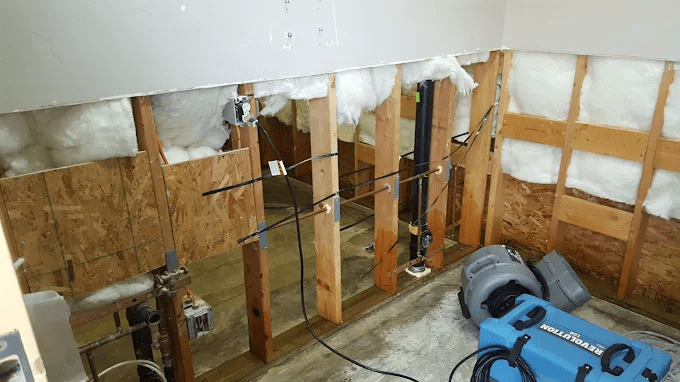
But rapid water extraction is not just about what you can see on the surface. Water trapped under flooring, behind baseboards, or inside wall cavities must also be addressed. Technicians may carefully remove baseboards, drill small weep holes, or use specialty drying systems that inject warm, dry air into cavities to push moisture out. In some cases, it makes more sense to remove saturated materials entirely, especially if the water is contaminated (such as sewage or floodwater) or if the materials are not structurally sound after saturation.
As extraction progresses, professionals monitor moisture levels continuously. They adjust equipment placement, change out saturated filters, and refine their approach as readings change. This active management is what separates a professional response from a simple “set it and forget it” approach. The goal is not just to remove visible water, but to return the structure to a dry, stable condition as quickly and safely as possible.
Drying, Dehumidification, And Hidden Moisture
Once the bulk of the standing water is removed, the focus shifts to drying and dehumidification. At this stage, the building may look “better” to the untrained eye, but significant moisture can still be trapped in building materials. Left alone, this hidden moisture can lead to mold growth, foul odors, and long-term structural issues. That is why rapid water extraction is always followed by a carefully managed drying phase.
Industrial air movers are strategically placed to create controlled airflow across wet surfaces. This airflow helps lift moisture from materials into the air, where it can then be captured by dehumidifiers. High-capacity dehumidifiers – often desiccant or low-grain refrigerant units – draw moisture out of the air, lowering humidity and speeding up the drying process. In Nampa, where outdoor conditions can vary significantly by season, professionals adjust equipment to account for temperature, relative humidity, and the specific layout of the building.
Throughout this process, technicians from Allay Disaster Cleanup Services use moisture meters and thermal imaging to track drying progress inside walls, under flooring, and in structural components. They may move air movers and dehumidifiers, add containment barriers to focus drying in specific areas, or adjust temperature to optimize evaporation. This active management continues until moisture readings confirm that the structure has reached acceptable, dry standards for the materials involved.
Addressing hidden moisture is also about preventing future problems. Proper drying significantly reduces the chance of mold growth, but in cases where contamination is suspected – such as floodwater from outside or sewage backups – additional cleaning and antimicrobial treatments may be necessary. Odor control, HEPA air filtration, and surface disinfection may be integrated into the drying phase to ensure the environment is not only dry, but also clean and safe for occupants.
Health, Safety, And Contamination Concerns
Not all water is equal in terms of risk. After a catastrophe, the water in your home or business may be classified into categories based on contamination levels. Category 1 water (often from clean supply lines) poses the least immediate health risk, but it can quickly degrade into Category 2 (gray water) or Category 3 (black water) as it comes into contact with building materials, soil, sewage, or chemicals. Floodwater from rivers or heavy storm runoff is typically treated as highly contaminated from the start.
When contamination is suspected, rapid water extraction must be combined with appropriate safety measures. Technicians use personal protective equipment such as gloves, boots, and respirators as needed. Porous materials that have absorbed contaminated water – drywall, insulation, carpet, and some types of furniture – are often removed rather than dried, because they can harbor harmful microorganisms that are difficult to fully eliminate. This can be emotionally difficult for property owners, but it is a key step in protecting long-term health.
Air quality is another major concern after a water catastrophe. As materials dry, microscopic particles and spores can become airborne. Professional teams may use HEPA air scrubbers and negative air machines to filter the air, especially if there is visible mold growth or if demolition is required. Odor control products may also be applied, but reputable companies avoid simply masking smells; they focus on removing the source of the odor through thorough cleaning, drying, and, when necessary, material removal.
For families in Nampa dealing with vulnerable individuals – such as young children, elderly relatives, or those with respiratory conditions – discussing health concerns with the restoration team is important. Allay Disaster Cleanup Services can explain what steps they are taking to manage contamination, how they are protecting indoor air quality, and when it is safe to reoccupy specific areas of the property.
Choosing A Local Expert In Nampa
After a catastrophe, it is common for out-of-town contractors and fly-by-night operators to flood into affected areas, offering quick fixes and vague promises. While some may be legitimate, others may lack the training, equipment, or accountability needed for proper rapid water extraction and restoration. Working with a trusted, local company in Nampa, ID, offers several advantages, including faster response times, familiarity with regional building practices, and ongoing support if issues arise later.
When evaluating a water extraction provider, ask about their training, certifications, and equipment. Do they follow industry standards for water damage restoration? Do they use professional-grade extraction units, air movers, and dehumidifiers? Can they provide moisture readings and documentation for your insurance company? A reputable company will be transparent about their process and willing to answer your questions clearly.
It is also wise to consider the full range of services offered. Rapid water extraction is only the beginning; you may also need structural drying, cleaning, contents restoration, and coordination with other trades for repairs. Companies like Allay Disaster Cleanup Services can often handle the entire process from emergency response through final cleanup, reducing the stress of managing multiple contractors during an already difficult time.
Finally, remember that local providers have a stake in the community. They understand Nampa’s weather patterns, common building types, and local code requirements. They are more likely to be available if you need follow-up support or have questions down the line. In a crisis, that combination of technical expertise and community commitment can make a meaningful difference in how quickly and completely your property recovers.
Frequently Asked Questions
How fast should I call for water extraction after a catastrophe? You should call as soon as you are safe and have addressed immediate dangers like active electrical hazards or gas leaks. Water damage begins to worsen within hours, so the earlier a professional team can begin extraction, the better your chances of saving flooring, walls, and belongings. In Nampa, many reputable companies, including Allay Disaster Cleanup Services, offer 24/7 emergency response precisely because timing is so critical.
Can I handle water extraction myself with household equipment? For very small spills, DIY methods may be adequate, but after a catastrophe involving multiple rooms, deep saturation, or contaminated water, household tools are rarely enough. Shop vacs and fans cannot match the suction power of professional extractors or the moisture removal of industrial dehumidifiers. More importantly, without proper moisture detection tools, it is easy to miss hidden water that leads to mold and structural problems later. Professional extraction is an investment in preventing larger, more expensive issues.
How long does the drying process usually take? The drying phase typically lasts from 3 to 7 days, depending on the extent of the damage, the types of materials affected, and environmental conditions. Concrete, hardwood, and heavily saturated structural components may take longer than carpet and drywall. During this time, technicians will regularly monitor moisture levels and adjust equipment until readings show that materials have reached appropriate dryness. Rushing this step or shutting equipment off too soon can allow hidden moisture to remain and cause future problems.
Will all my belongings be ruined after severe water damage? Not necessarily. The salvageability of your belongings depends on the type of water involved, how long items were exposed, and the materials they are made from. Non-porous items like metal, glass, and some plastics can often be cleaned and disinfected successfully. Porous items such as paper, certain fabrics, and particleboard furniture are more vulnerable, especially if the water was contaminated. Restoration professionals can help you sort items into salvageable and non-salvageable categories and may offer specialized cleaning for certain belongings.
Does rapid water extraction also address smoke or fire-related moisture? Yes. After a fire, large amounts of water are often used to extinguish the flames, leaving behind a mix of soot, smoke residue, and moisture. Rapid water extraction is crucial in these situations to prevent secondary damage and make way for fire and smoke cleanup. Coordinated services can handle both the water and residue issues efficiently. For related concerns, you can learn more at Smoke Damage, which connects to additional restoration resources.